12 out of 25 predictions correct in Tour de France 2026
Wednesday 29 July 2026 • Blog

Tour de France 2026 – How accurate were the CyclingOracle predictions?
The Tour de France is one of the most difficult races to predict. Sprint stages can be decided by positioning, mountain stages by tactics and form, while crashes, weather and breakaways add uncertainty every day. This Tour de France, only big names won, which made the predictions more accurate than before.
Before every stage of the 2026 Tour de France, CyclingOracle published predictions generated by our computer model. In total, the model produced 25 predictions: the winners of all 21 stages and the four major classifications (General, Points, Mountains and Youth). With the Tour now finished, we can objectively compare the predictions with the actual results. This article summarizes how the model performed throughout three weeks of racing.
Overall prediction quality
Across the 25 predictions, the model correctly identified the winner on 12 occasions, including five stage victories by Tadej Pogačar and three of the four final classifications.
- ✅ Winner predicted correctly: 12 of 25 (48%)
- ✅ Predicted winner ranked inside actual top-3: 16 of 25 (64%)
- ✅ Actual winner ranked inside predicted top-3: 21 of 25 (84%)
Looking beyond only the predicted winner, the complete rankings also performed consistently throughout the Tour.
- 🎯 Average Top-10 prediction accuracy: 70.6%
- 📊 Average Top-5 prediction accuracy: 69.5%
- 📈 Average Top-3 prediction accuracy: 67.6%
The strongest prediction of the Tour came in Stage 8, where the model achieved an impressive 91.1% top-10 prediction accuracy.
Correctly predicted winners
The model correctly predicted more than half of all overall predictions. Besides correctly forecasting three of the four jersey winners, it also identified the winner of ten Tour stages.
General classifications
- 🏆 General Classification – Tadej Pogačar
- ⛰️ Mountains Classification – Richard Carapaz
- 🌱 Young Rider Classification – Isaac del Toro
Stage winners
- Stage 3 – Tadej Pogačar
- Stage 6 – Tadej Pogačar
- Stage 8 – Tim Merlier
- Stage 10 – Tadej Pogačar
- Stage 12 – Tim Merlier
- Stage 14 – Tadej Pogačar
- Stage 16 – Remco Evenepoel
- Stage 19 – Tadej Pogačar
- Stage 21 – Mathieu van der Poel
| Correct Predictions - Tour de France 2026 | ||
|---|---|---|
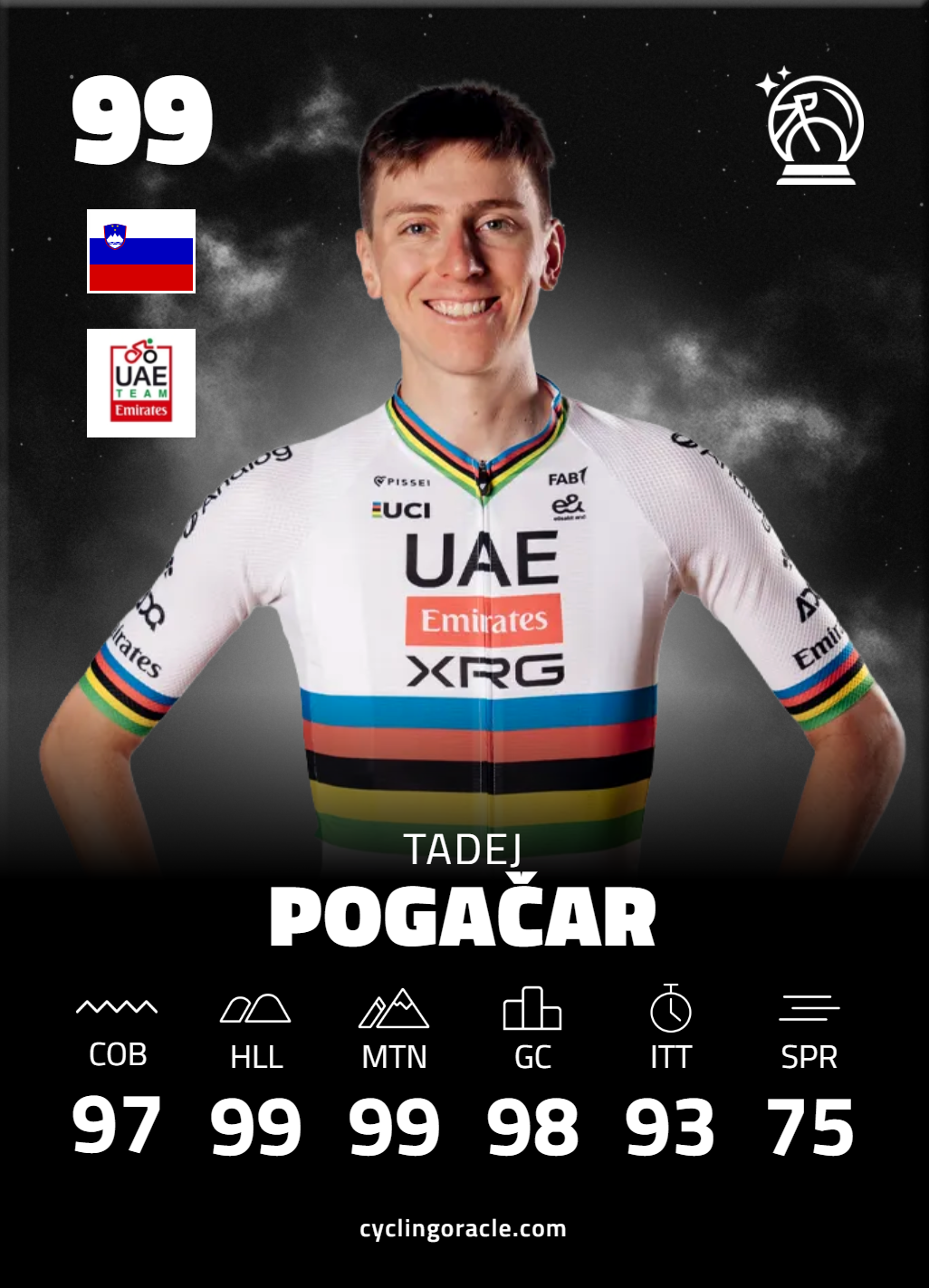 GC | 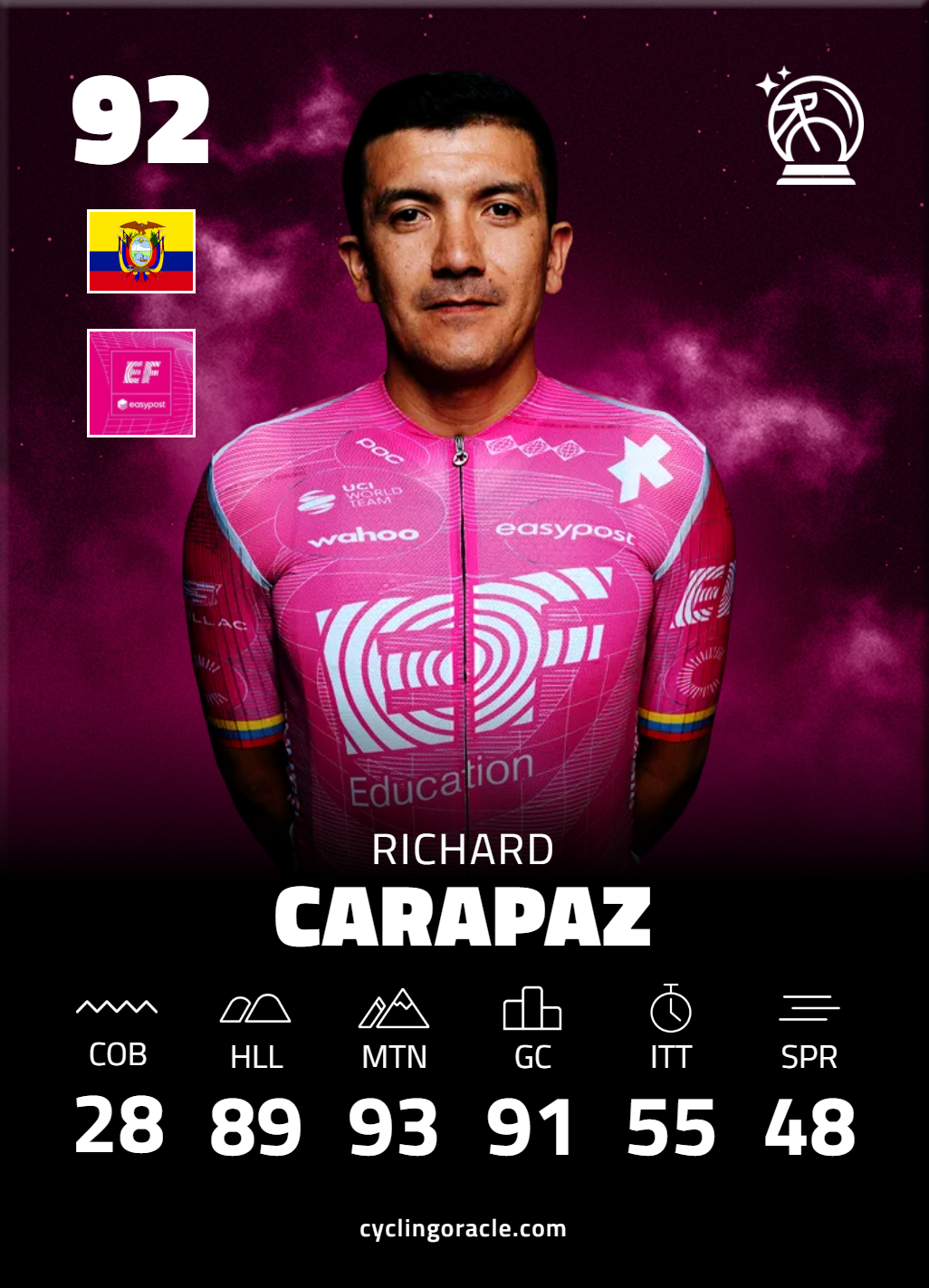 KOM | 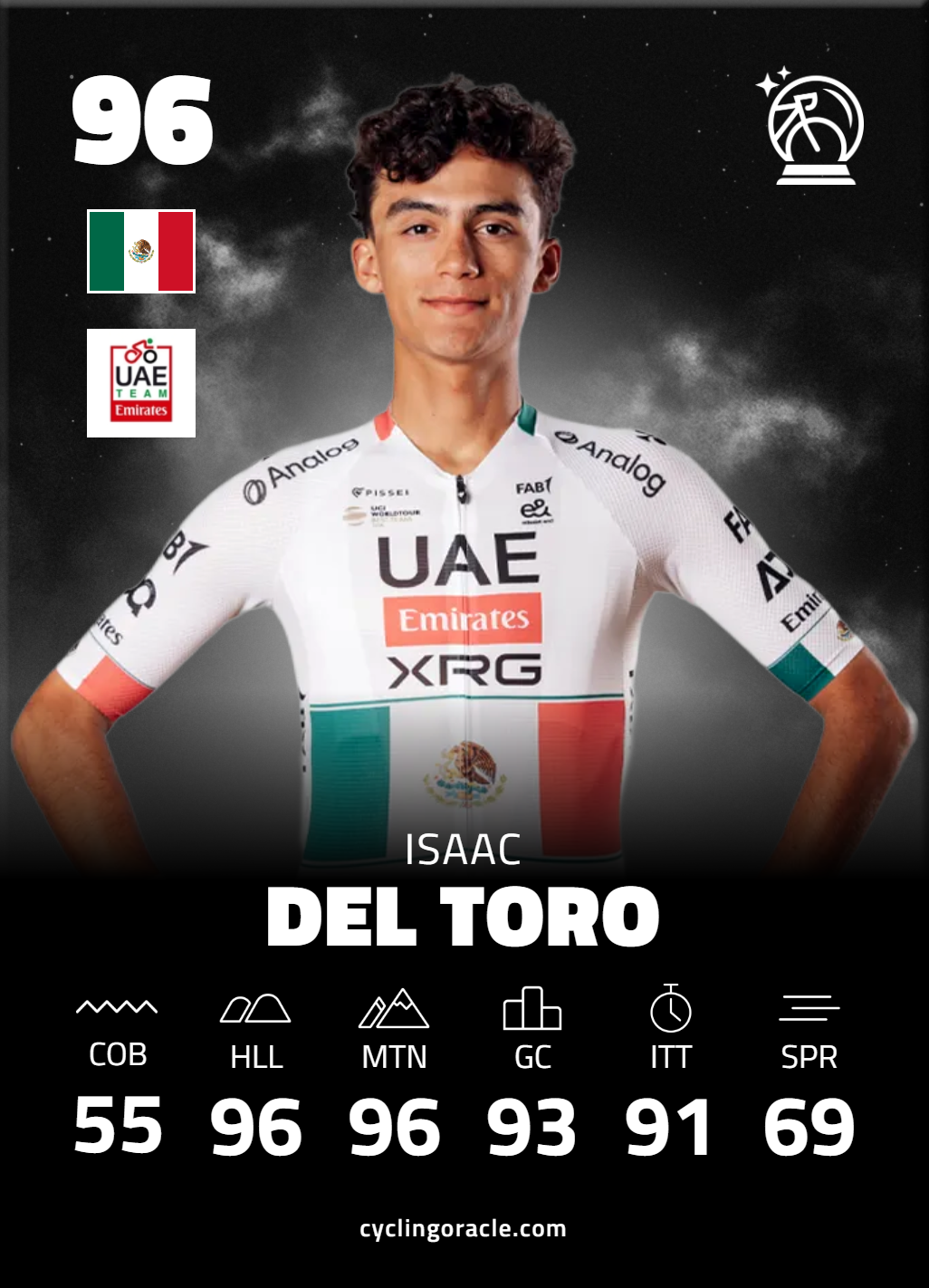 Youth |
stage 3 | stage 6 | 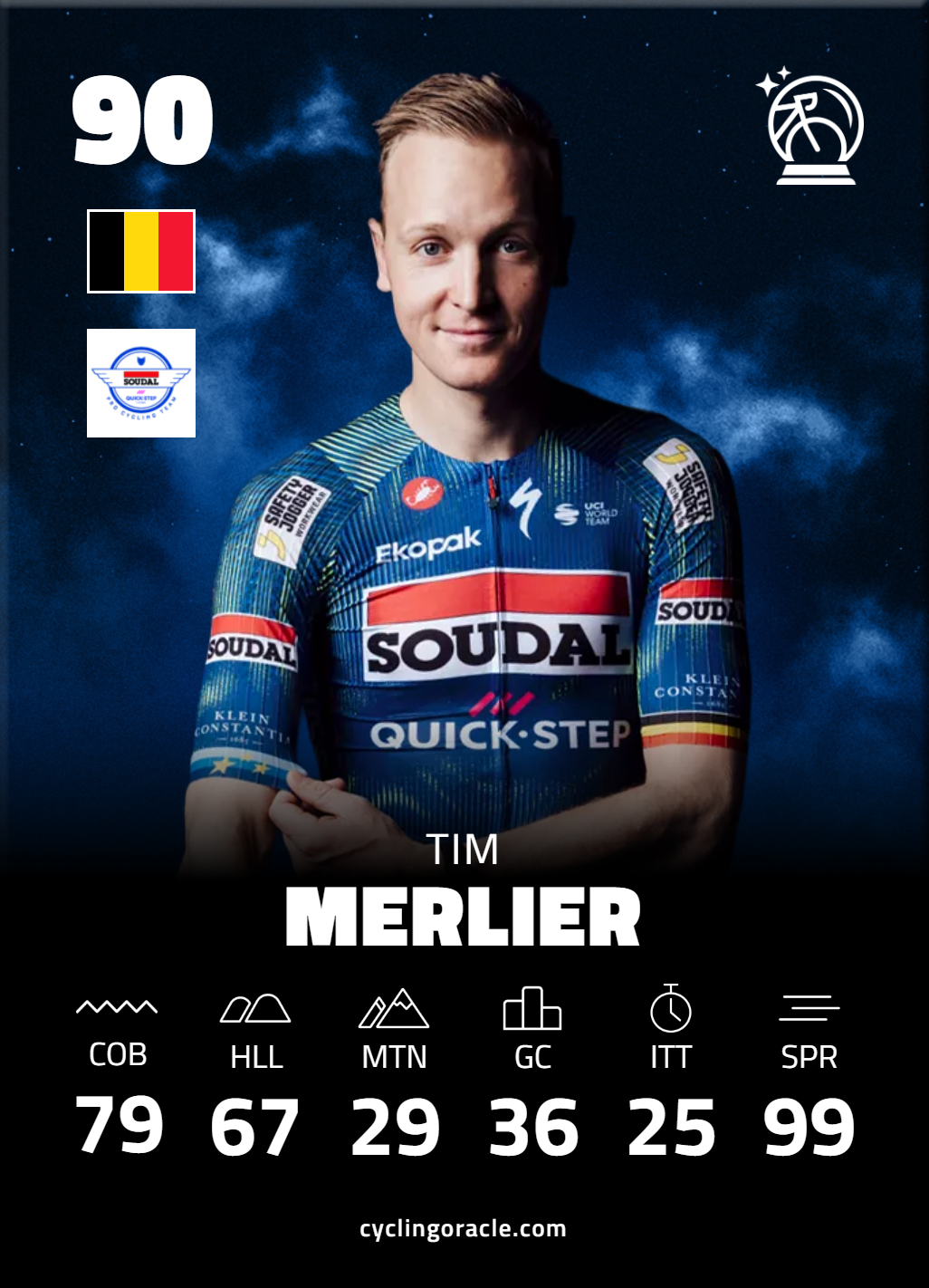 stage 8 |
stage 10 | stage 12 | stage 14 |
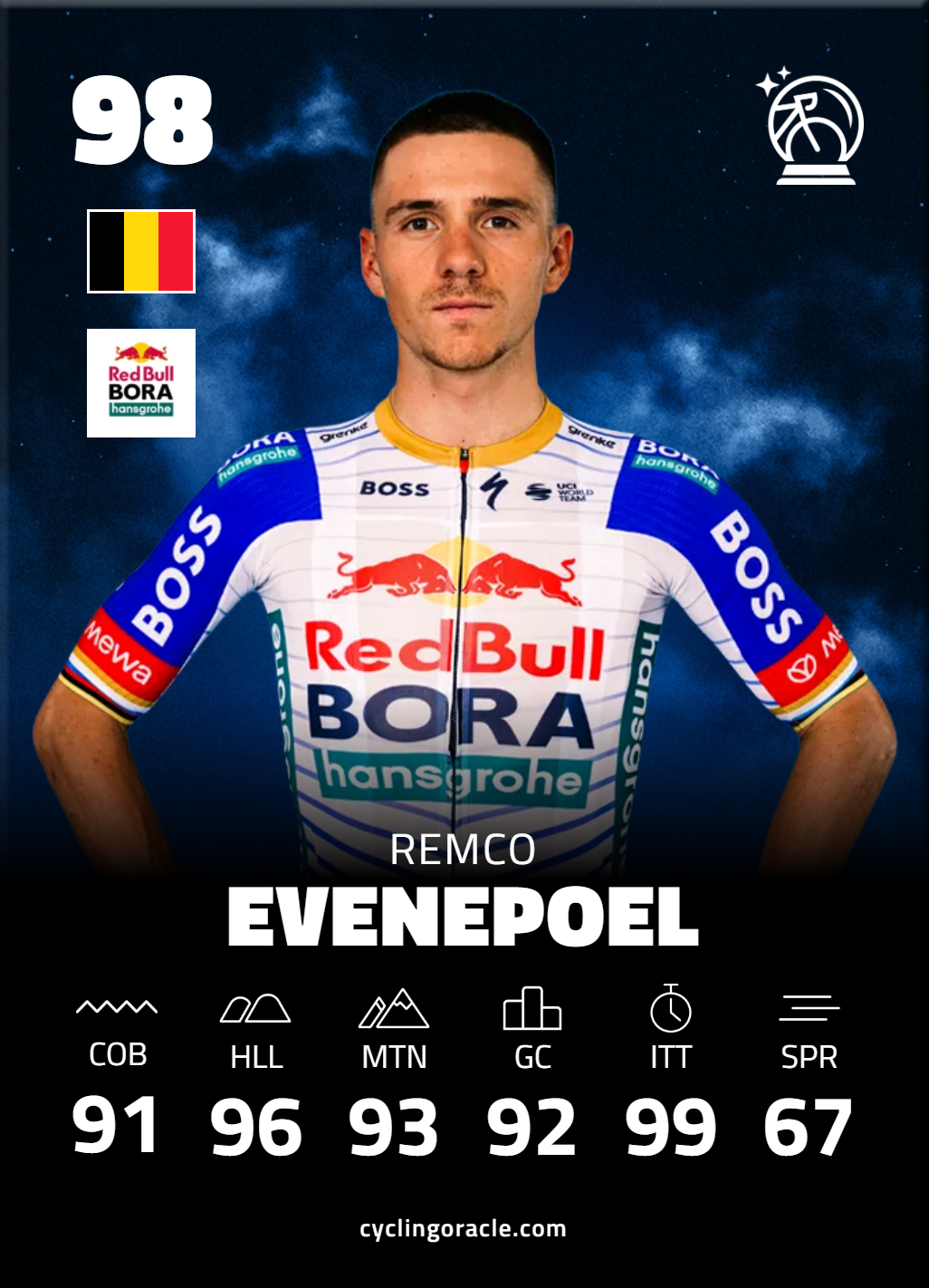 stage 16 | stage 19 | 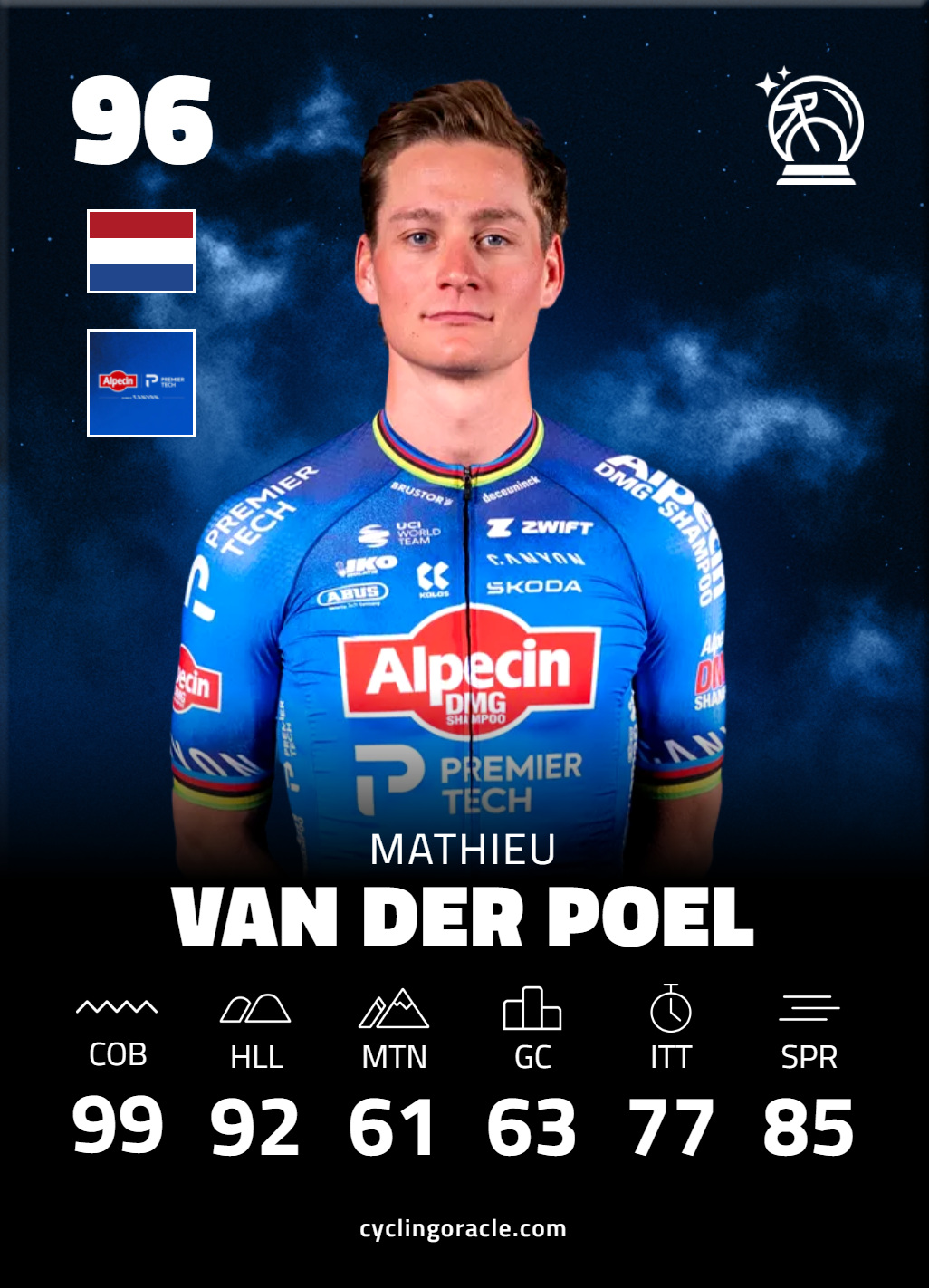 stage 21 |
Consistency throughout the Tour
While correctly predicting the winner is the most visible performance indicator, ranking the eventual winner consistently among the favourites provides a more complete picture of the model's quality.
In 84% of all predictions (21 of 25), the eventual winner was already included in the model's predicted top-3. All 25 predicitions had the eventual winner in it's top-10 of most likely winners. This illustrates that even when the predicted winner did not win, the model generally identified the strongest contenders for the stage or classification.
The most difficult stage for the model was Stage 4. Mathieu van der Poel was selected as the predicted winner, but eventually finished well outside the top 20 after an unfortunate race. It was the only prediction during the Tour where the predicted winner did not finish among the first twenty riders.
Even on stages where the eventual winner was ranked relatively low beforehand, the model still included them among its main contenders. The lowest-ranked eventual winners among 25 predictions were:
- Stage 15 – Remco Evenepoel (predicted 10th)
- Stage 17 – Mauro Schmid (predicted 7th)
Prediction accuracy by stage
Prediction quality naturally varied depending on the type of stage. Sprint stages with a limited number of realistic contenders generally produced high prediction scores, while stages suited to breakaways proved considerably harder to forecast. Likewise, mountain stages featuring clear favourites often resulted in accurate predictions, whereas more tactical stages created greater uncertainty.
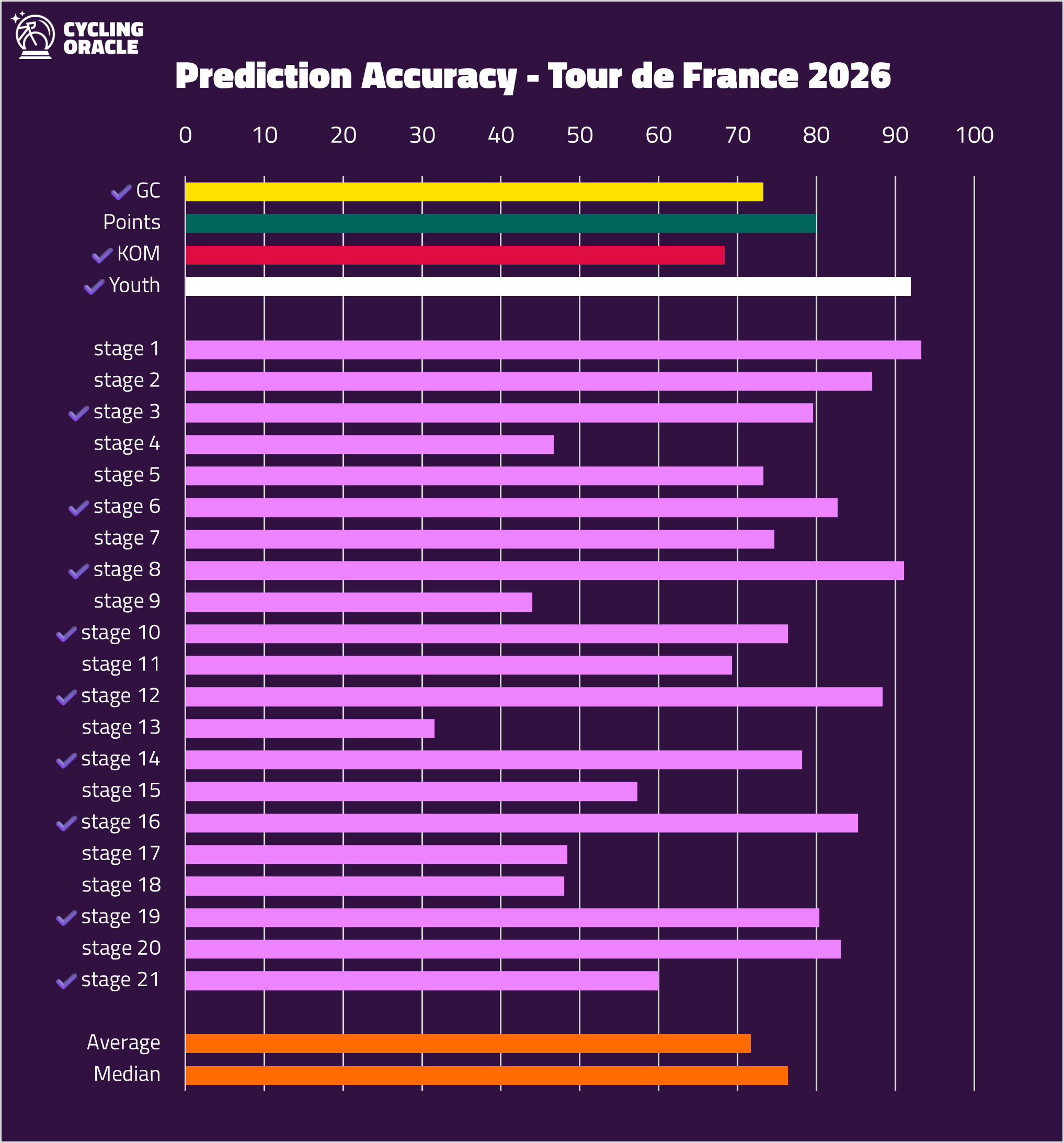
Across all 21 stages, top-10 prediction accuracy ranged from approximately 21% to over 91%, illustrating the varying predictability of different race profiles.
Why Top-10 accuracy matters
Simply counting whether the predicted winner was correct tells only part of the story.
Professional cycling is inherently unpredictable. Even the strongest rider may lose due to crashes, illness, tactical decisions, weather conditions or successful breakaways. A prediction model therefore should not only be evaluated on whether it selected the eventual winner, but also on how accurately it ranked the strongest contenders overall.
CyclingOracle therefore evaluates the complete prediction rather than only the rider placed first. A rider finishing second after being predicted first still reflects a strong prediction, while consistently placing the eventual winner among the highest-ranked riders demonstrates that the underlying rider strength model captures much of the competitive balance within the peloton.
Looking back
The 2026 Tour de France provided another valuable benchmark for evaluating and improving the CyclingOracle prediction model.
Across 25 predictions, the model correctly identified 13 winners, while the eventual winner appeared in the predicted Top-10 on 21 occasions. Combined with an average Top-10 prediction accuracy of more than 70%, these results provide a useful foundation for further refining the model ahead of future races.
As always, predictions represent probabilities rather than certainties. That uncertainty is exactly what makes professional cycling so compelling. Every successful prediction is the result of accurately modelling rider strengths, while every unexpected outcome provides new information that helps improve the model for future races.